Website Design
Maestro - Tutoring Platform
UX Research & Foundations
In late 2024, the founders of Maestro reached out to me through a mutual friend with the task of designing their tutoring website from scratch. They were building a platform that would offer more affordable tutors and a more transparent service than the existing agencies parents were used to.
Project Duration (Phase 1)
December 2024 - January 2025
Client
Maestro
My role
Solo UX Researcher
0-5 minutes reading time
Case Study Overview
This case study (Phase 1) covers the research and strategy behind Maestro’s new website. I studied competitor sites and user behaviour, and identified non-transparent, consultation heavy flows led to drop offs. With transparency and credibility at the core, we landed on a simple hero solution, a price calculator that reduces decision friction. We had a very positive outcome as early usability tests reveals users now felt more confident to book consultation.
Research & Findings
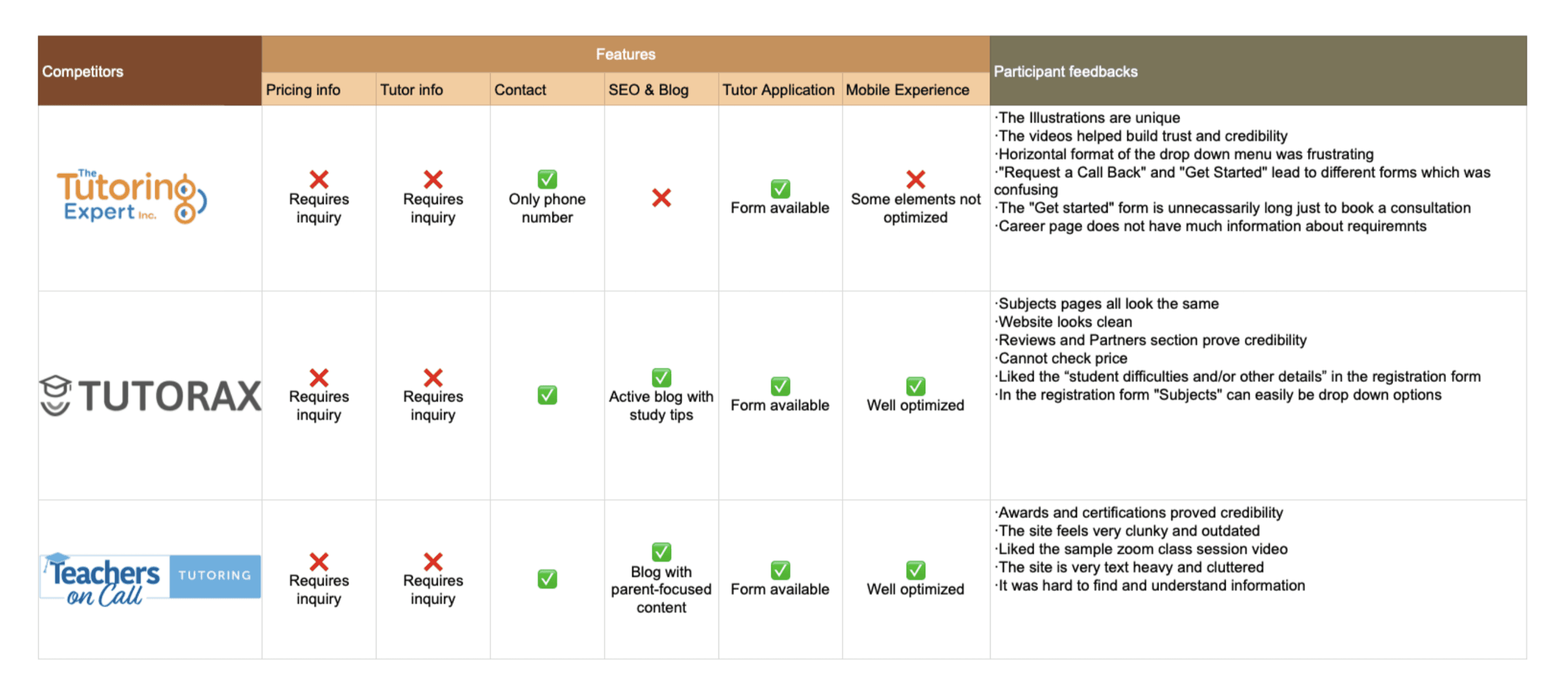
Fig: Competitive analysis report

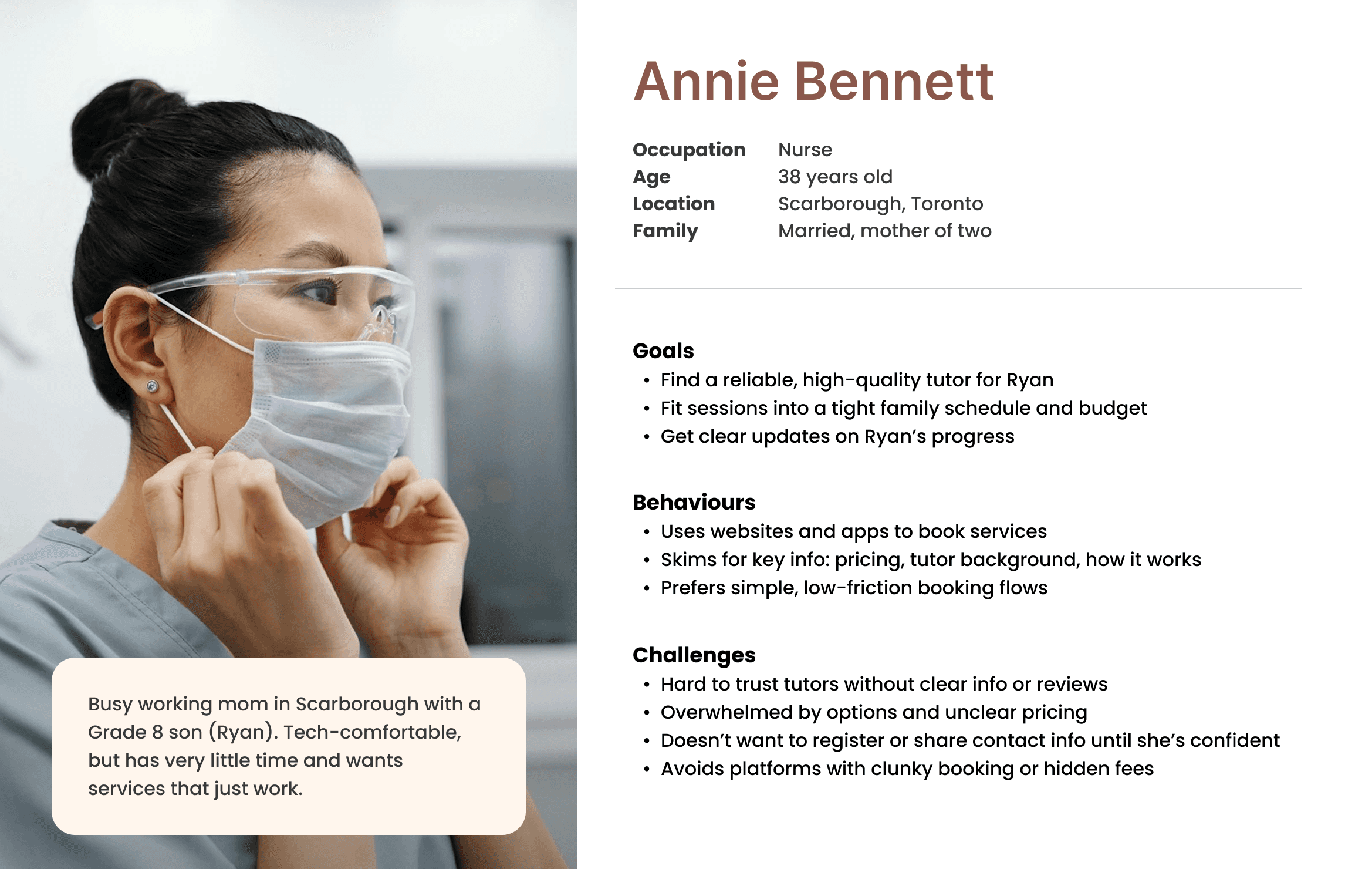
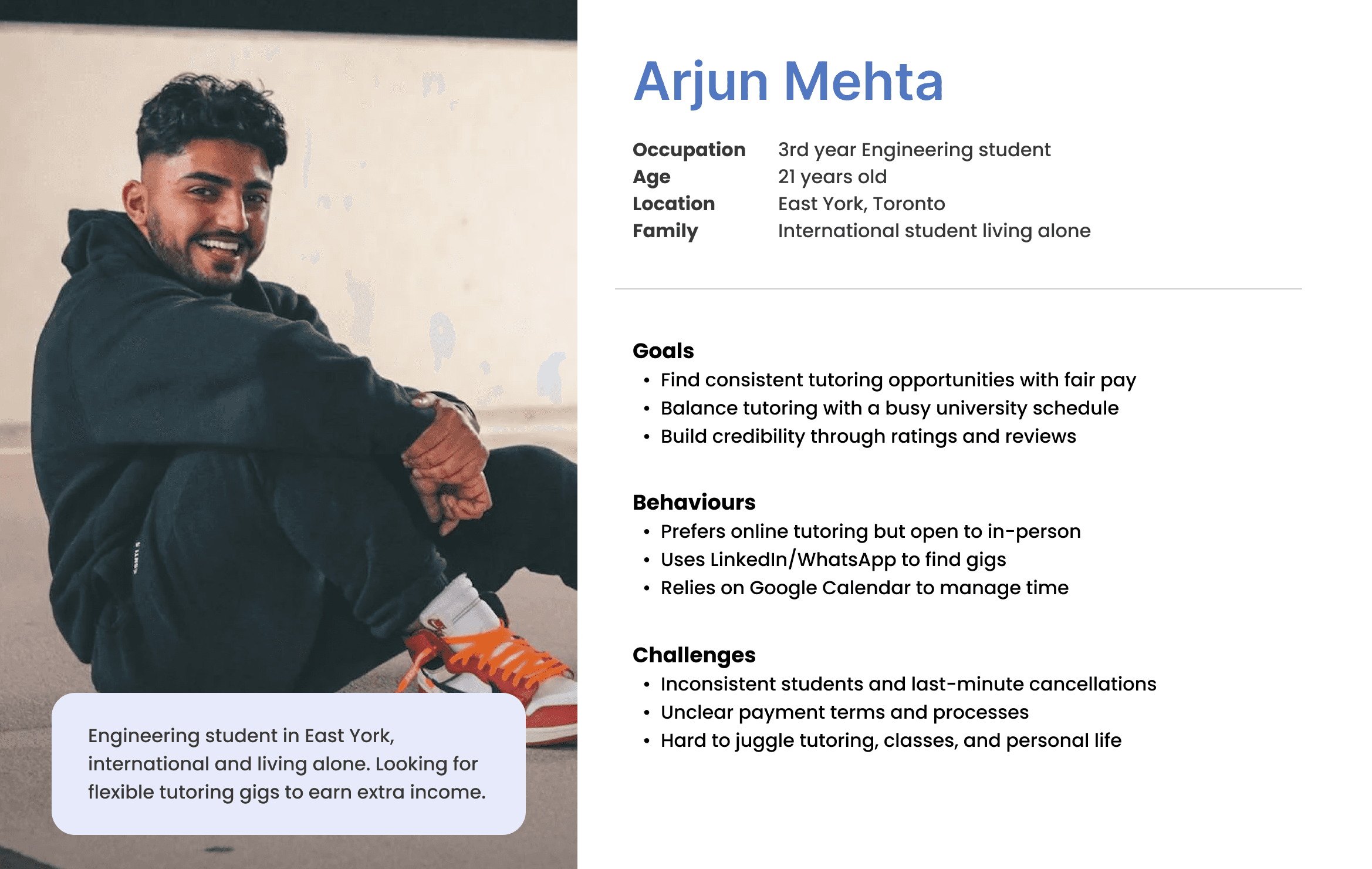
User Personas
Maestro’s target demography are:
Students and parent looking for tutors.
Tutors looking to sign-up.
Strategy & Goals
With all the research findings and the user persona guiding me, the problem statement became clear:
How might we make Maestro’s offering feel clear and transparent enough that parents feel comfortable reaching out, without forcing them into a high-commitment consultation first?
Our Objectives
Reduce information friction by surfacing key details and rough pricing before consultations.
Build trust early with clear, honest content about tutors, pricing, and class structure.
Lower the commitment barrier so parents can explore comfortably, then reach out when ready.
Our Solutions
To respond to the problems we discovered and our goals, we planned a few key changes to Maestro’s website experience:
Themed visual design: Ancient Greek-inspired visuals to avoid the generic “stock” look.
Subject-specific pages: Each subject gets its own page with tailored content, pricing, tutors.
Social proof for credibility: Parent testimonials + tutor university logos to build trust without formal awards yet.
These decisions helped Maestro feel more real, less generic, and more aligned with what parents and students said they look for. But they didn’t fully solve the biggest friction point: Pricing transparency.
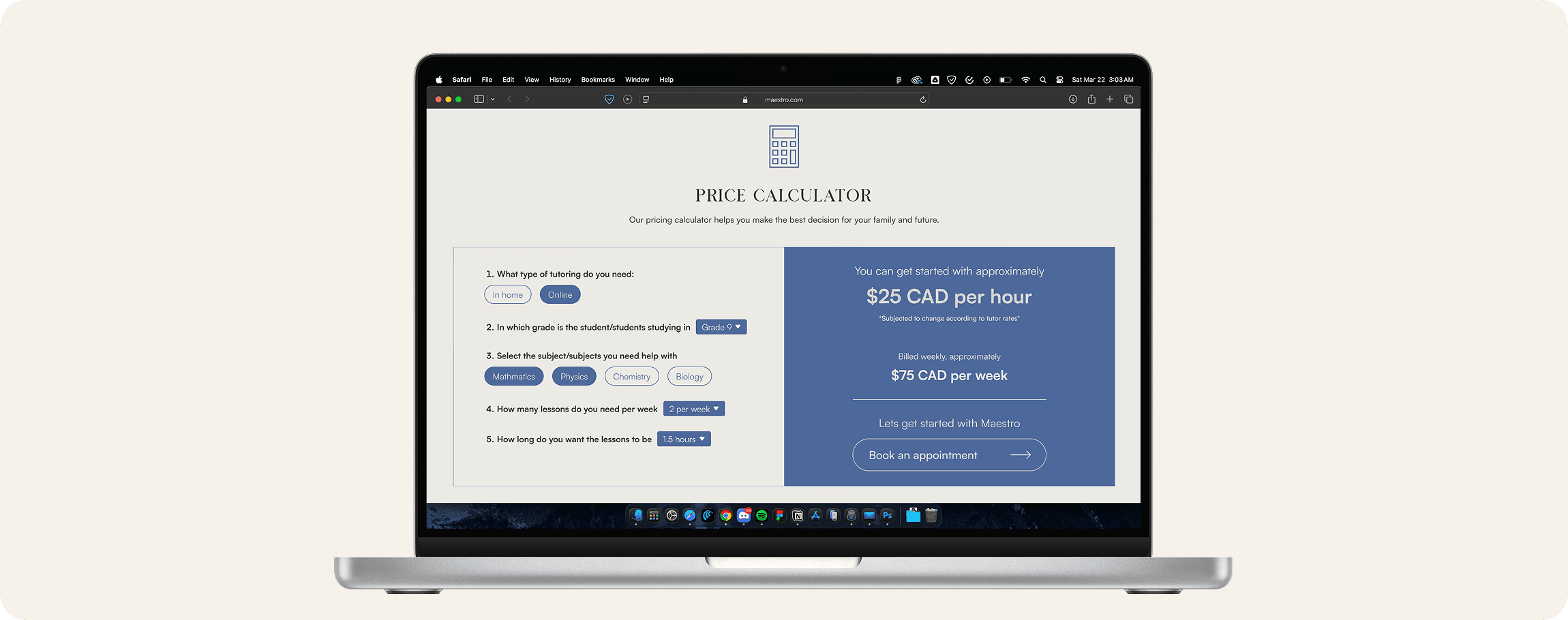
⭐️ Our Hero Solution: The Price Calculator
We knew transparency and credibility were critical, but pricing was complicated, there was no single fixed “price” we could safely show on the website.
Our constraints:
Different tutors charge different hourly rates.
Students need different lengths of classes per week.
Some students want to take multiple subjects.
Packages vary by level, frequency, and goals.
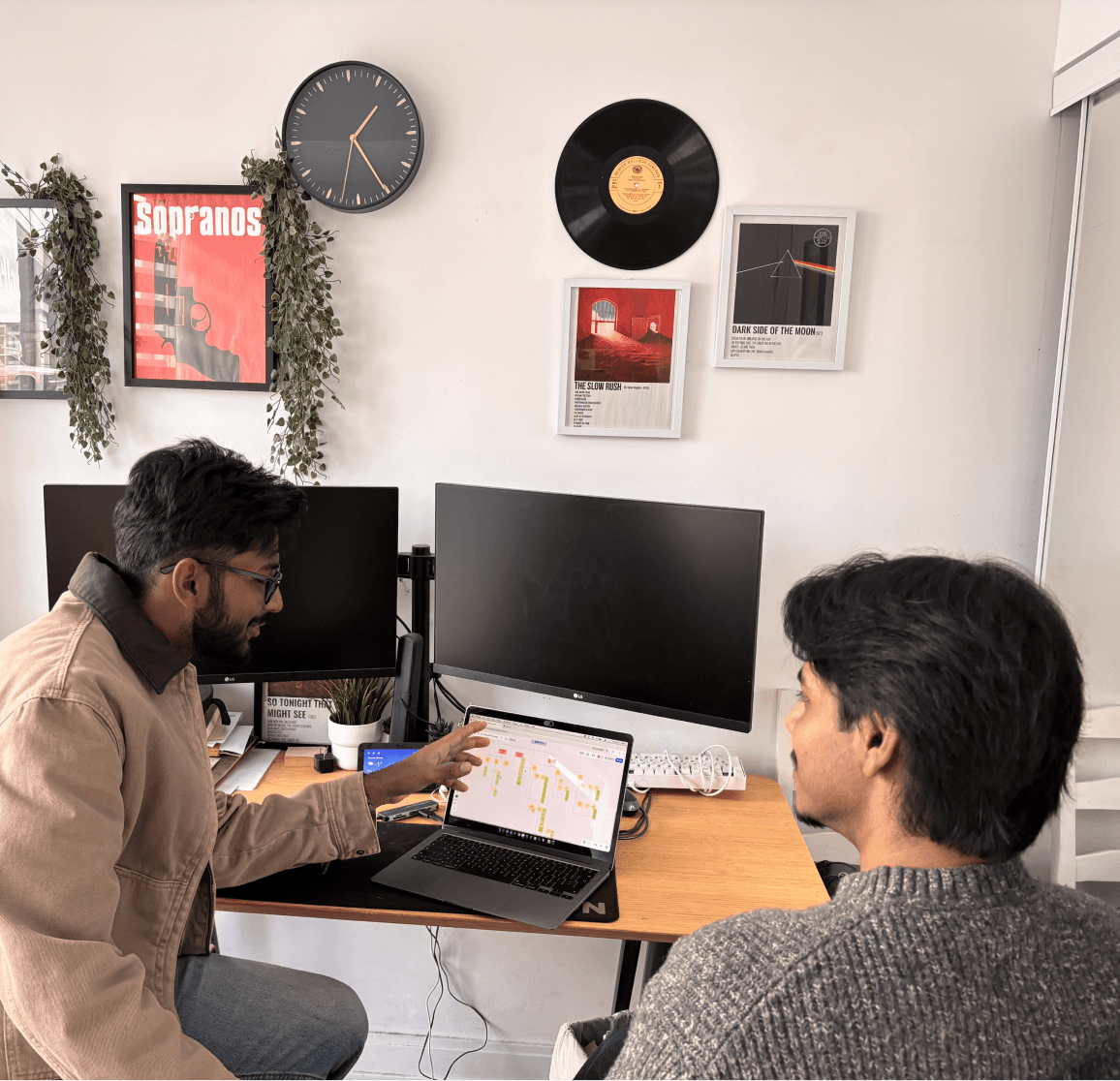
During a brainstorming session with the founder and developer, one idea stood out:
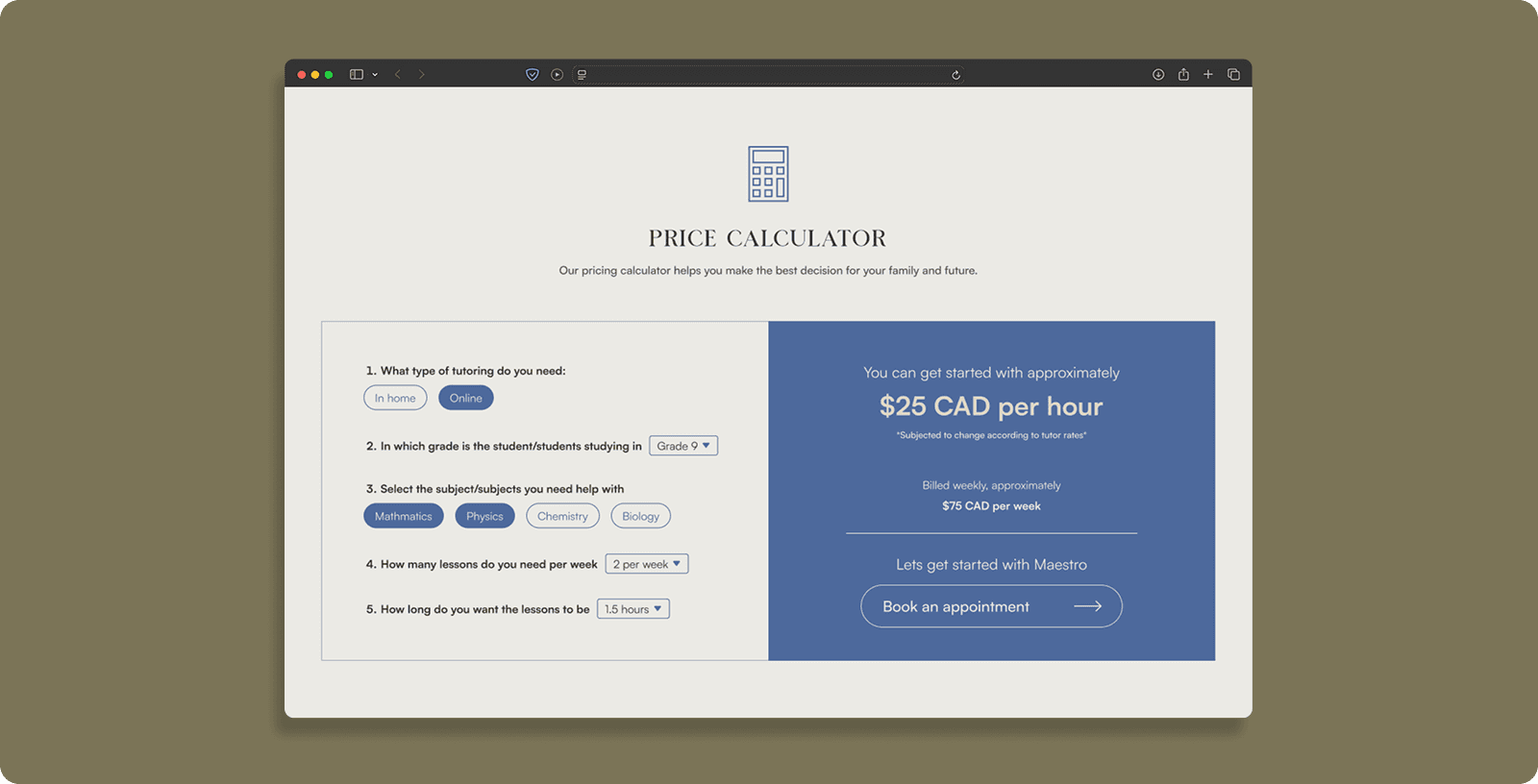
What if we could let users quickly estimate their own costs before consultation?
Outcomes
I mocked up a simple standalone price calculator prototype to validate the concept and ran a small usability test with 5 participants.
Testing
Asked participants to imagine finding this calculator on a tutoring website.
Gave tasks (estimating the cost for a specific subject, grade, and hours per week, then adjusting subjects/hours to see how the price changes)
Collected quick 1–5 ratings on ease of use, pricing clarity, and confidence to book, plus one open question on what they would improve.
Results
Ease of use: 4/5 used the calculator without any guidance, indicating a low-friction interaction.
Exploration and control: 5/5 explored different hour and subject combinations on their own.
User satisfaction: 3/5 said they were satisfied would be willing to book a consultation.
Improvements: Include an estimated weekly/monthly cost as well for more clarity.
Overall, the tests suggested that the new feature reduced information friction, increased perceived trust, and improved intent to convert, exactly what we aimed for in this research phase.
What I Learned from This Project
Throughout this project, I gained invaluable insights and lessons that have significantly enriched my understanding of product design and user experience. Here's what I took away from this experience:
Sometimes the best “design” is simply making the right information visible at the right time.
What feels good for the business can push users away if they don’t yet know whether it’s a fit.
Well-structured research and synthesis, even if small, can reveal big opportunities.
Good foundational research makes later UI decisions faster and more aligned.